Program – International Conference on Innovative and Intelligent Information Technologies
Program of the second International Conference on Innovative and Intelligent Information Technologies…

Program of the second International Conference on Innovative and Intelligent Information Technologies…

The Second International Conference on Innovative and Intelligent Information Technologies (IC3IT’26) will take place from 26 to 28 March 2026 in Hammamet, Tunisia, bringing together researchers, academics, industry experts, and practitioners from around the world.
The conference aims to provide a scientific platform for exchanging ideas, presenting innovative research results, and discussing emerging challenges in intelligent information technologies. Participants will have the opportunity to share their latest scientific contributions and explore collaborations in a rapidly evolving digital landscape.
IC3IT’26 is organized by the Faculty of Science of Tunis (University of Tunis El Manar, Tunisia) and the Faculty of Mathematics and Informatics (University of Batna 2, Algeria), in collaboration with several research laboratories. The conference will be held in a hybrid format, allowing both physical and online participation from international researchers.
The scientific program will cover a wide range of topics related to innovative digital technologies, including:
The conference will feature keynote lectures delivered by internationally recognized scholars, as well as technical sessions dedicated to presenting peer-reviewed research papers. Accepted papers are expected to be included in the conference proceedings and may be indexed in international scientific databases.
By bringing together experts from academia and industry, IC3IT’26 aims to foster innovation, strengthen international research collaboration, and promote the development of intelligent digital technologies that address current and future societal challenges.
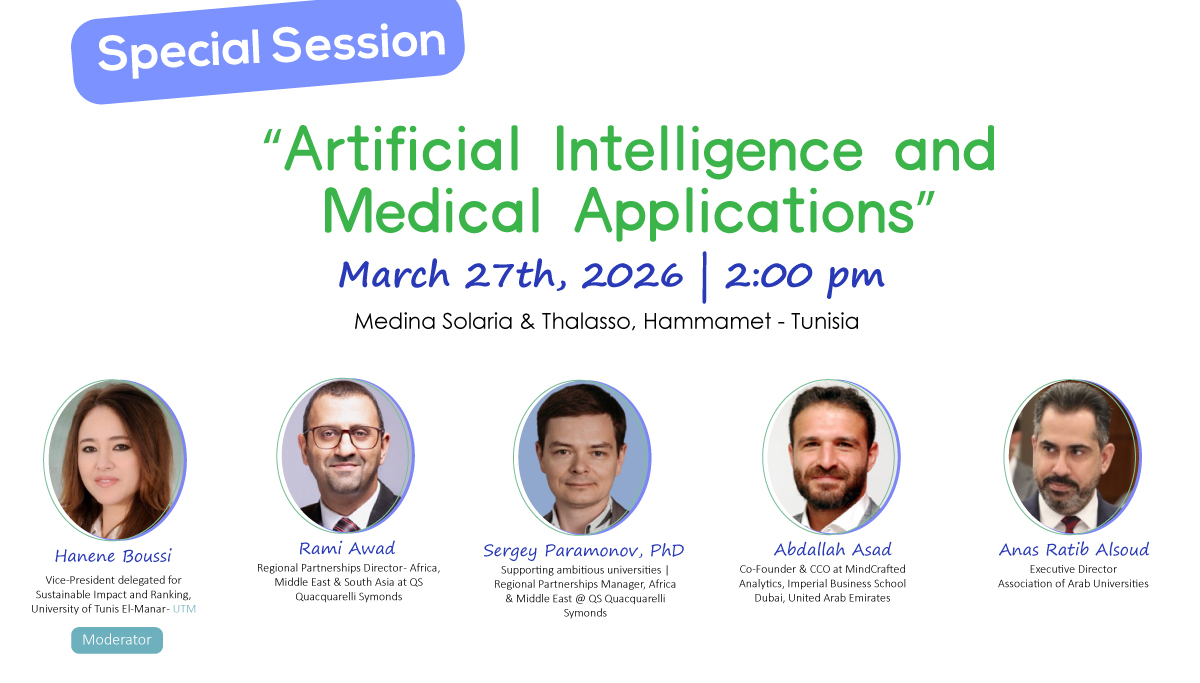
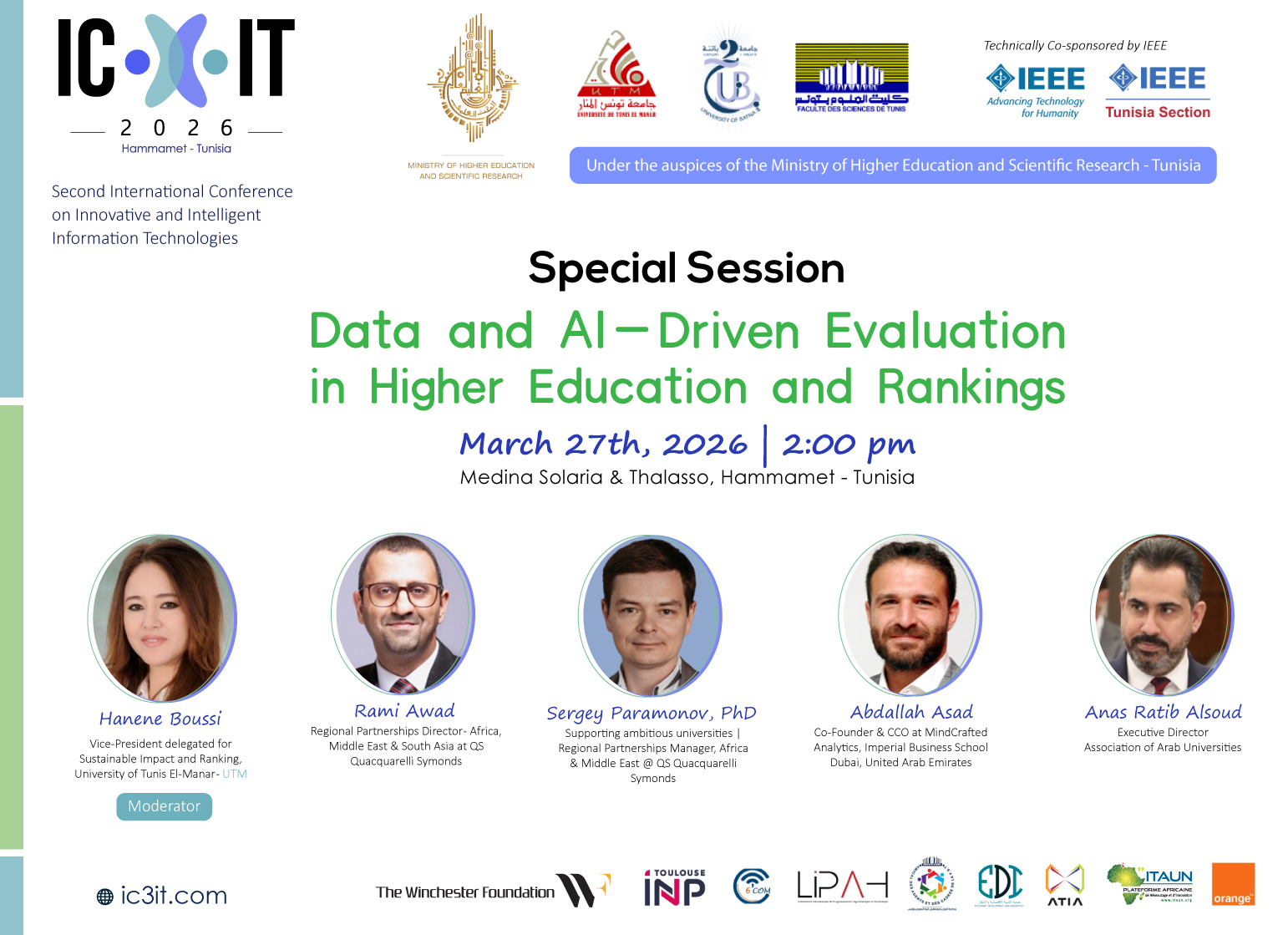
As part of the second edition of IC3IT’26, we are organizing a Special Session dedicated to University Rankings — a strategic topic shaping the future of higher education worldwide (https://www.ic3it.com/special-ranking-session/).
Why should you attend?
This session is designed for university leaders, faculty members, researchers, policymakers, and education professionals who aim to strengthen their institution’s global positioning.
Secure your seat today and be part of this important conversation!
Register here: https://www.ic3it.com/special-ranking-session/
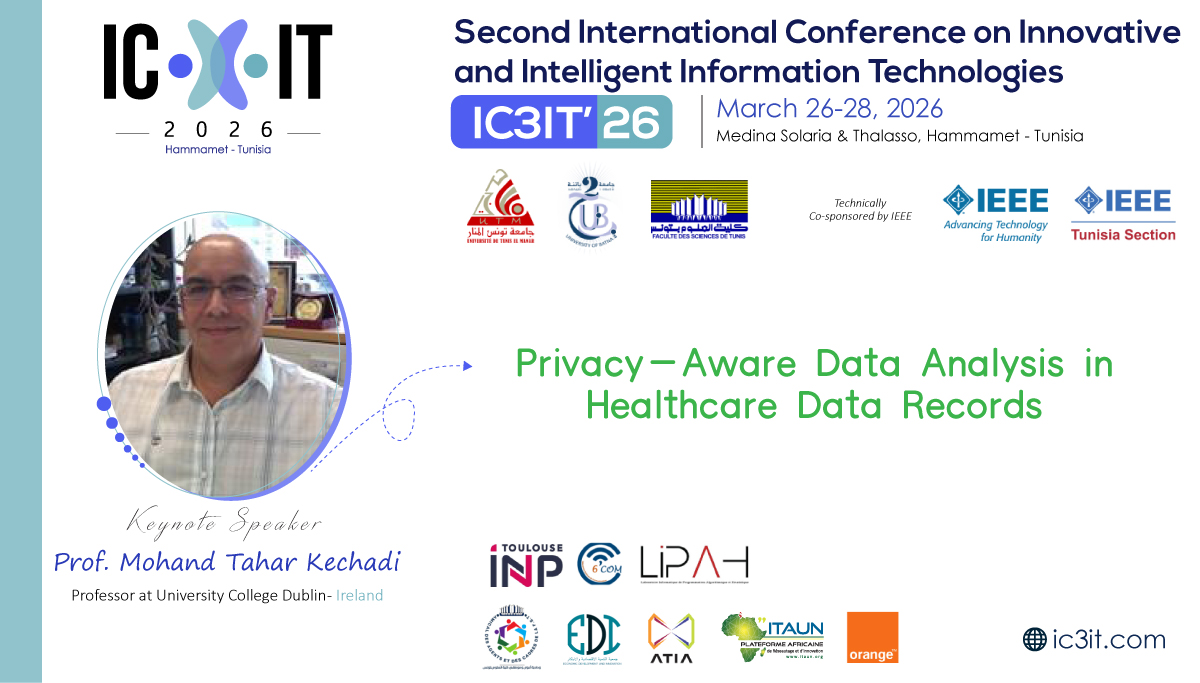
Second International Conference on Innovative and Intelligent Information Technologies – IC3IT’26
Mohamed Tahar Kechadi, Professor at University College Dublin-Ireland
Title: Privacy-Aware Data Analysis in Healthcare Data Records
Abstract :
In the healthcare sector, large amounts of data about patients, their medical conditions, and practices have been collected through clinical databases and other healthcare processes. Currently, these systems record nearly all aspects of care, including patient personal information, clinical trials, hospital records, diagnoses, medications, test results, imaging data, costs, and administrative reports. As in other application domains, the big data revolution also holds great promise in healthcare, as the available data on individual patients is very rich and contains crucial knowledge that can be exploited to improve patient care, accelerate research, and reduce costs. For instance, Global healthcare data is growing exponentially, with estimates projecting a rise from approximately 2.3 zettabytes (ZB) to over 10.8 ZB in 2025, representing a 36% annual growth rate. Healthcare data accounts for nearly 30% of the world’s total data, driven by electronic health records, imaging, and connected devices. Turning this massive amount of data into knowledge that can be used to identify needs, predict and prevent critical patient conditions, and help practitioners make rapid, accurate decisions is not only desirable but also an urgent necessity. Therefore, healthcare organizations must be able to manage and analyse their data rapidly and efficiently to answer critical questions about diseases, treatments, patient behaviour, and care management. However, building such a system faces significant challenges: 1) data complexity, 2) privacy, security, ethical, legal, and social issues, and 3) interoperability, portability, and compatibility. In this presentation, we will discuss privacy issues in healthcare data by designing and building a privacy-aware protocol for healthcare data analysis. The solution is presented based on well-defined requirements to demonstrate its applicability and efficiency.
Biography:
Professor M-Tahar Kechadi obtained a PhD and MSc degrees in Computer Science from the University of Lille 1, France. He is currently a full professor of data science at the School of Computer Science, UCD. He is a PI at the Insight Centre for Data Analytics and a PI at the Co-Centre for Sustainable Food Systems. Professor Kechadi is a specialist in AI and Cybersecurity with extensive experience in machine learning, particularly in understanding dataset characteristics. He has a strong background in managing and analysing data quickly and efficiently. Big data will continue to grow exponentially, underpinning new waves of innovation across nearly every sector of the global economy and reshaping how we build and use computers (hardware and software). Professor Kechadi is a PI in many large research centres in Ireland (including the Insight Centre for Data Analytics, Co-Centre for Sustainable Food Systems, …) and has contributed to numerous large-scale AI projects, ranging from multimodal healthcare data to NLP models for fake news detection and digital agriculture. His work in privacy-preserving analytics has added an extra dimension to addressing ethical and privacy considerations in the development of future AI. Moreover, he has served as the Chair of numerous conferences and workshops. He serves on the scientific committees of several international conferences and has organized and hosted leading conferences in his field. He has established and maintained collaborations with CERN, including student co-supervision, software development, data analysis, and EU project collaborations. He has been a visiting professor at many universities, including Liverpool, Fuzhou, Artois, Lille, …). Currently, he is an adjunct professor at Dalian University of Technology and a member of the Expert Advisory Committee for Intelligent Cyber-Physical Systems, another area of research in which AI technologies are crucial.
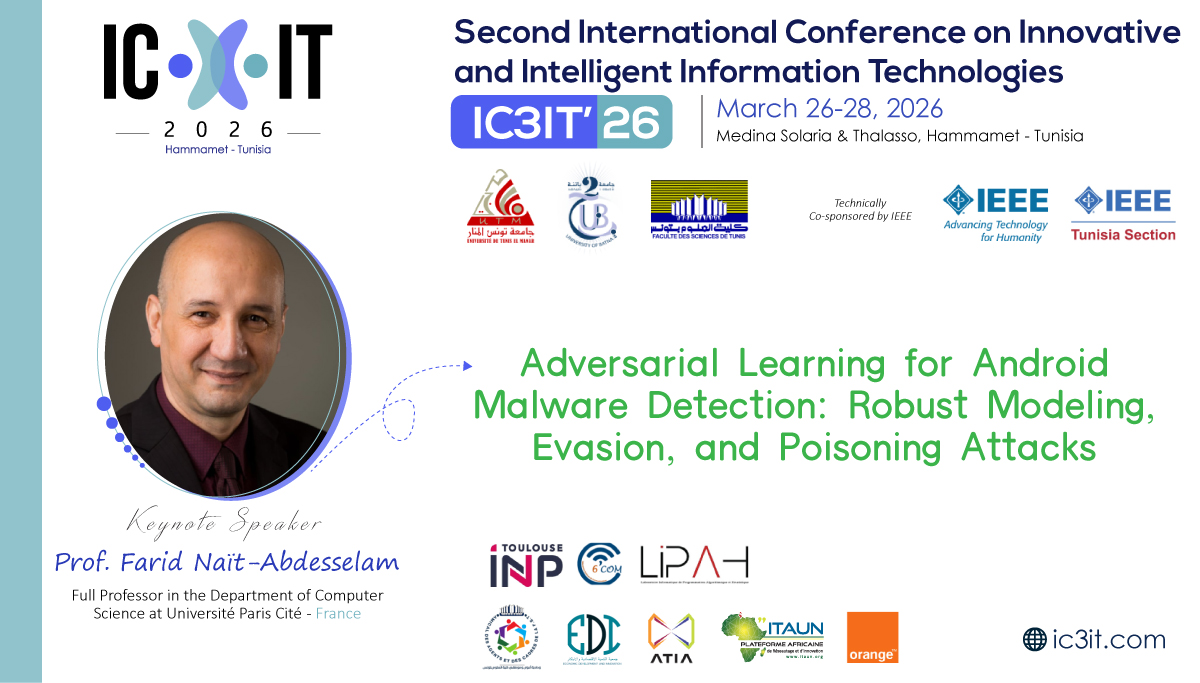
Second International Conference on Innovative and Intelligent Information Technologies – IC3IT’26
Prof. Farid Naït-Abdesselam, Professor at Université Paris Cité, France.
Title: Adversarial Learning for Android Malware Detection: Robust Modeling, Evasion, and Poisoning Attacks
Abstract :
The widespread adoption of Android smartphones has made mobile malware detection a critical cybersecurity challenge. Machine learning techniques have become central to Android malware detection due to their scalability and adaptability. However, as these systems are increasingly deployed, attackers have shifted their focus toward exploiting weaknesses in the learning process itself, turning malware detection into an adversarial problem.
This keynote explores adversary-aware approaches to Android malware detection, examining both robust detection strategies and emerging attack models. It discusses how representation learning and intelligent application transformations can improve resilience against evasion, while highlighting the vulnerability of current systems to adversarial manipulation. The talk also addresses data poisoning and label-spoofing attacks, as well as the growing impact of large language models in automating sophisticated evasion strategies. The keynote concludes with a discussion of defensive mechanisms and open challenges in building robust, trustworthy, and future-ready Android malware detection systems.
Biography:
Farid Naït-Abdesselam is a Full Professor at Université Paris Cité. He received the State Engineering degree from the University of Science and Technology Houari Boumediene, Algeria, in 1993, an M.S. degree from Université René Descartes [now Université Paris Cité], France, in 1994, and a Ph.D. degree from Université de Versailles Saint-Quentin-en-Yvelines [now Paris-Saclay University], France, in 2000, all in Computer Science.
His research focuses on secure communication systems, network resilience and optimization, intrusion detection, and adaptive defense strategies in complex, constrained, and heterogeneous environments. He has authored over 180 peer-reviewed publications, edited two scientific books, and contributed several book chapters on advanced topics including network security, malware forensics, and blockchain technology. His work bridges theoretical foundations and practical deployments across mobile, vehicular, drone, and large-scale networked systems.
Second International Conference on Innovative and Intelligent Information Technologies – IC3IT’26
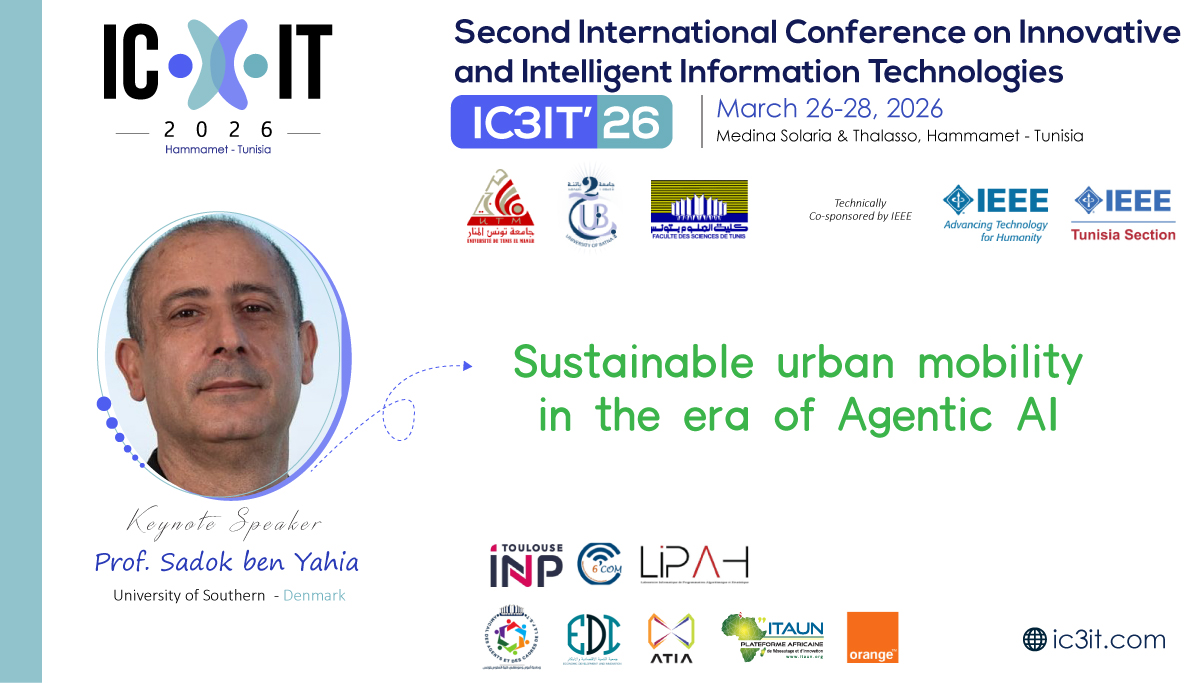
Prof. Sadok Ben Yahia, University of Southern Denmark.
Title: Sustainable urban mobility in the era of Agentic AI
Abstract:
Rapid urban population growth has led to a sharp increase in mobility demand, placing unprecedented pressure on urban transport systems and creating major challenges for the development of sustainable and liveable cities. Traffic congestion remains one of the most critical barriers to sustainable urban mobility, driving excessive energy consumption, increased greenhouse gas (GHG) emissions, economic losses, and a decline in overall quality of life. Addressing these challenges requires intelligent, data-driven solutions that combine efficient public transport, adaptive traffic management, and advanced digital technologies.
In this talk, we explore how Artificial Intelligence (AI)—specifically Large Language Models (LLMs) integrated with Reinforcement Learning (RL) and Vehicle-to-Everything (V2X) communication—can enable next-generation Intelligent Traffic Management (ITM) systems for sustainable urban mobility. We focus on agentic AI frameworks that move beyond reactive control toward context-aware, adaptive, and scalable decision-making in complex urban environments.
We first present an LLM-based Agentic ReAct Bus Eco-Driving Framework (LARBEF) for the public transport sector. In this framework, an RL-driven agent leverages V2X communication and real-time contextual information—such as road slope, passenger load, ambient temperature, traffic signal states, and queue length—to optimise eco-driving strategies for different bus technologies, including conventional diesel, electric, and plug-in hybrid electric buses. The proposed approach reduces energy consumption and emissions while maintaining service reliability and passenger comfort.
We then introduce MARLATS, a Model Context Protocol–based Agentic ReAct LLM framework for adaptive traffic signal control in large-scale urban networks. MARLATS combines LLM-based reasoning with RL-driven control and V2X-enabled sensing to dynamically coordinate traffic signals in response to evolving traffic conditions. The framework improves traffic efficiency, reduces energy use and emissions, and enhances economic performance at the network level.
Overall, this talk demonstrates how integrating agentic LLM reasoning with reinforcement learning and connected vehicle technologies can transform both vehicle-level and network-level mobility management. The presented frameworks highlight the potential of AI-driven mobility systems to support cleaner, more efficient, and more inclusive urban transport, contributing to the long-term sustainability of future cities.
Biography:
Sadok BEN YAHIA is a Full Professor at the Southern Denmark University (SDU) since September 2023. Before joining SDU, he was a full professor at the Technology University of Tallinn (TalTech) since January 2019. He obtained his HDR in Computer Sciences from the University of Montpellier (France) in April 2009. His research interests mainly focus on trustworthy and safe LLM-based AI systems and their application to urban mobility in smart cities (e.g., information aggregation and dissemination and traffic congestion prediction), Recommendation Systems, and fake content fighting.
Second International Conference on Innovative and Intelligent Information Technologies – IC3IT’26
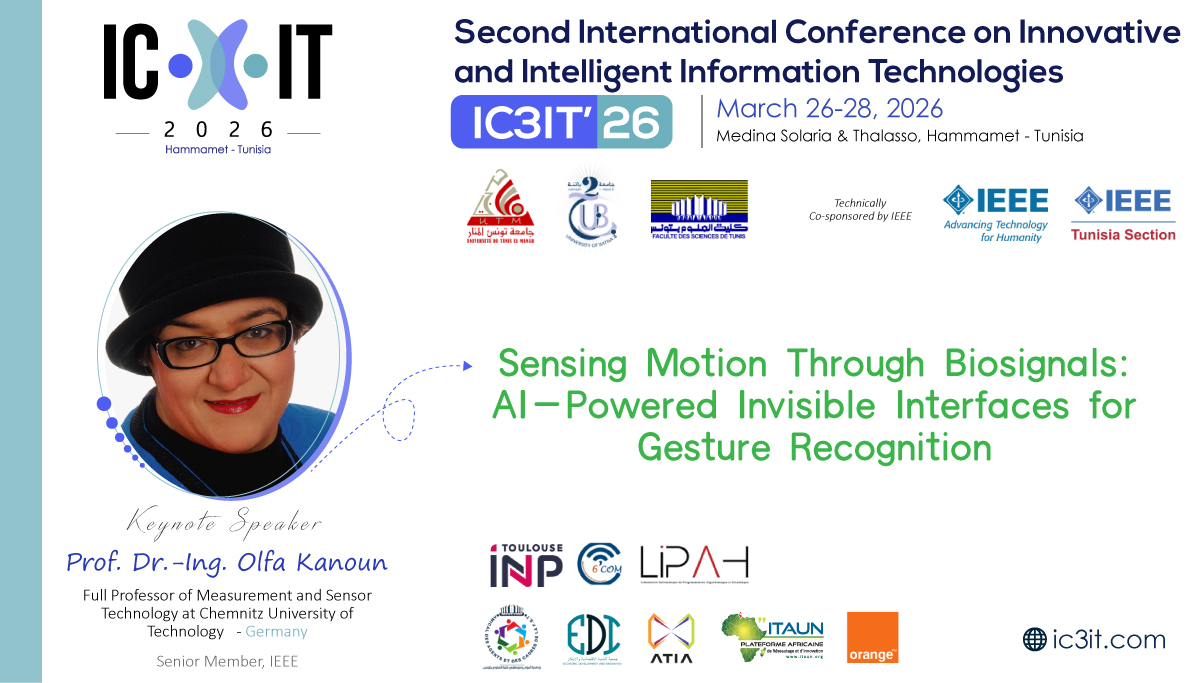
Prof. Olfa Kanoun, Chemnitz University of Technology, Germany
Title: Sensing Motion Through Biosignals: AI-Powered Invisible Interfaces for Gesture Recognition
Abstract:
Intelligent wearable systems are transforming human-computer interaction. By sensing motion directly beneath the skin, they eliminate the need for cameras while preserving user privacy. This keynote presentation will demonstrate how electrical impedance tomography, bioimpedance spectroscopy, electromyography and flexible, force-sensitive sensors can capture the body’s internal signals in order to enable AI-powered gesture recognition. These invisible interfaces can decode muscle activation dynamics, subtle movement patterns and motor intentions in real time, creating a seamless interaction with digital systems. By detecting gestures at their biological source rather than their visible manifestation, these camera-free technologies open up new possibilities in the areas of accessible computing, rehabilitation applications and the intuitive control of assistive devices. This approach represents a paradigm shift towards natural, privacy-preserving interfaces that respond to the body’s hidden language of motion, from everyday wearables to clinical settings.
Biography:
Prof. Dr.-Ing. Olfa Kanoun (Senior Member, IEEE) has been a Full Professor of Measurement and Sensor Technology at Chemnitz University of Technology since 2007. Her research spans impedance spectroscopy, energy-autonomous wireless sensors, nanocomposite-based flexible sensors, smart wearables, and hand gesture recognition, with applications in battery diagnostics, medical wearables, rehabilitation monitoring, and environmental sensing.
Prof. Kanoun has published over 700 peer-reviewed papers and has been consistently ranked among the Top 2% of scientists globally (Stanford University, 2020–2024). Her exceptional contributions have been recognized through prestigious awards including the Presidential Award of the Tunisian President for Best Tunisian Researcher Abroad (2024), the IEEE Instrumentation and Measurement Society Technical Award (2022), and the IEEE IMS Faculty Course Award (2018).
She has established key academic initiatives, including the IEEE IMS-TC2 Committee on Impedance Spectroscopy (founded 2018) and the International Workshop on Impedance Spectroscopy (IWIS) (founded 2008). Since 2007, she has supervised over 50 graduate researchers, initiated the IEEE Student Branch at TU Chemnitz, and contributed to EU Horizon projects and DFG review boards.
Her work bridges academic research with practical applications in Industry 4.0, healthcare, and IoT, emphasizing energy efficiency, real-time monitoring, and intelligent human-machine interaction through wearable sensing systems.
Second International Conference on Innovative and Intelligent Information Technologies – IC3IT’26
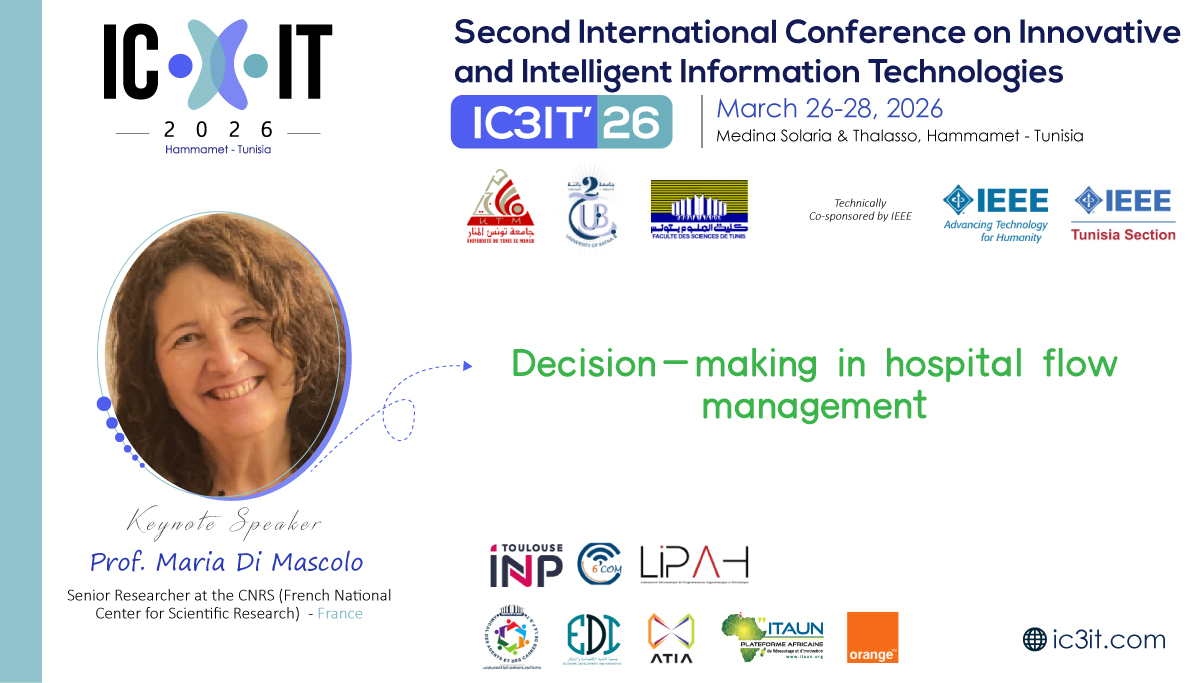
Prof. Maria Di Mascolo
Title: Decision-making in hospital flow management
Abstract :
This talk will present the stakes of flow management in the health domain, as well as the specificities of healthcare production systems compared to manufacturing systems. We will see some examples of work, carried out in the G-SCOP laboratory, showing the contribution of engineering sciences, and more particularly of industrial engineering, for the study and the improvement of the organization of healthcare production systems, and more particularly hospital sterilization departments and operating rooms. This talk will thus show how modeling, performance evaluation, mathematical optimization, risk analysis, and AI can contribute to making the management of healthcare production systems more efficient.
Biography:
Maria Di Mascolo, is Senior Researcher at the CNRS (French National Center for Scientific Research) and a member of the G-SCOP (Grenoble-Sciences for Design, Optimization and Production) laboratory.
Her main scientific interests are related to the modelling, analysis and optimization of systems for the production of goods and services, with a special interest in the healthcare production systems and the sustainability. She uses stochastic models, optimization methods, and seeks to integrate Artificial Intelligence into decision-support systems. She is a member of the project’s steering committee of the DCarbo (Data for Decarbonization) major national project. She heads the Industrial Engineering chapter of the SAGIP (French Society of Automatic Control, Industrial and Systems Engineering), and is editor-in-chief of the ISTE OpenScience journal “Industrial and Systems Engineering“. She is Deputy Head of Sustainable Industrial Engineering Master’s degree at Grenoble Institute of Technology.
Second International Conference on Innovative and Intelligent Information Technologies – IC3IT’26
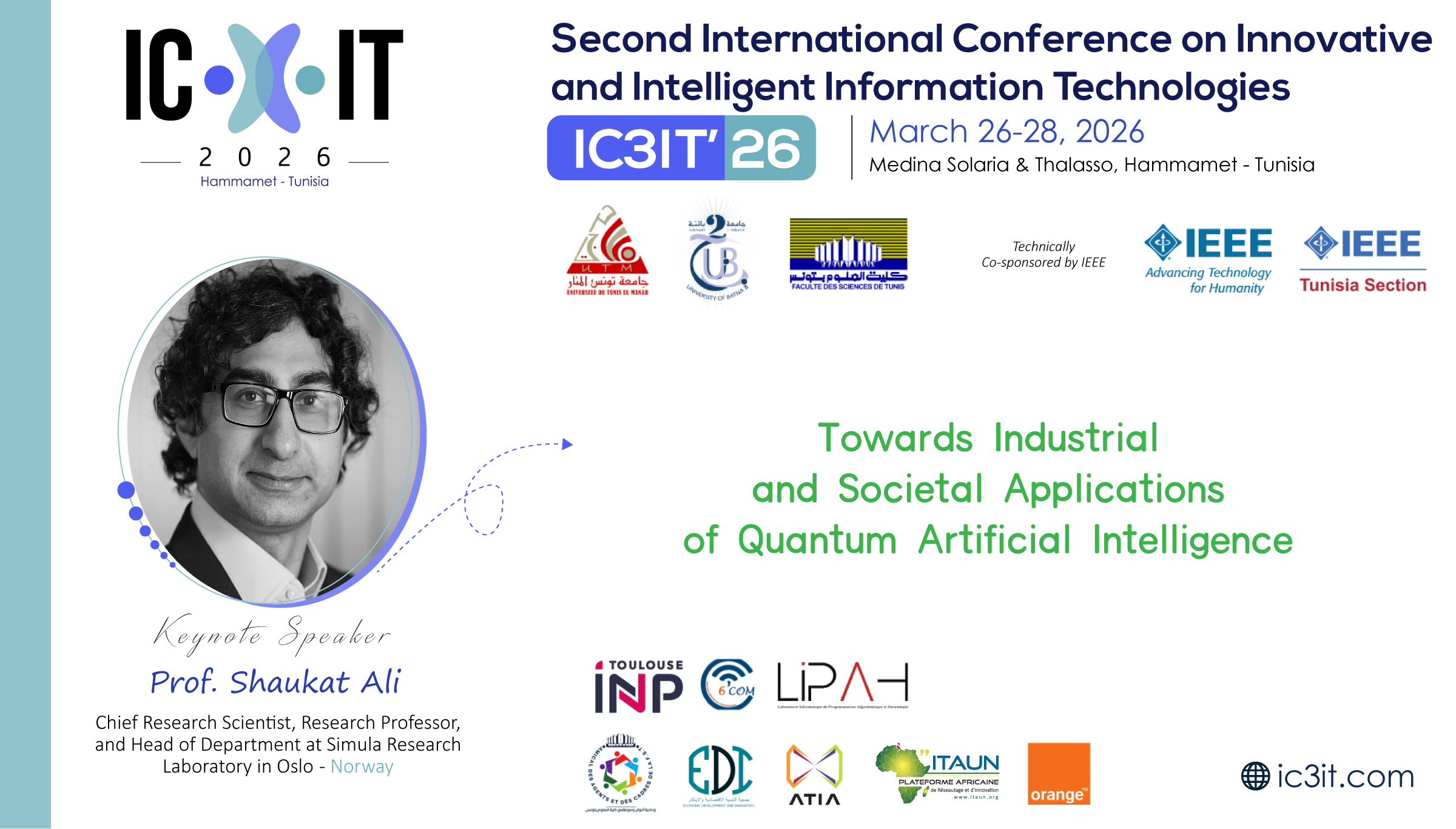
Prof. Shaukat Ali, Chief Research Scientist, Research Professor, and Head of Department at Simula Research Laboratory in Oslo, Norway.
Title: Towards Industrial and Societal Applications of Quantum Artificial Intelligence
Abstract:
Quantum Artificial Intelligence (QAI) aims to enhance classical AI algorithms and devise novel algorithms based on the principles of quantum mechanics. Promising benefits include faster training, more efficient optimization, and improved predictive capabilities. Although still in its early stages, QAI has shown encouraging results across various domains. This keynote will highlight real-world applications of QAI, focusing on our research that applies quantum optimization techniques, such as quantum annealing and the quantum approximate optimization algorithm, to software systems, including robotics and elevators. It will also present how we are exploring quantum machine learning for practical use in sectors such as healthcare and robotics. The keynote will conclude with a discussion of our research findings, the current limitations of QAI, and the critical research challenges that must be addressed to enable its broader and more reliable adoption in real-world systems.
Biography:
Shaukat Ali is a Chief Research Scientist, Research Professor, and Head of Department at Simula Research Laboratory in Oslo, Norway. His research focuses on developing advanced methods for engineering cyber-physical systems with artificial intelligence, digital twins, and quantum computing. He has led numerous national and European research projects in areas such as software testing, search-based software engineering, model-based systems engineering, and quantum software engineering. Dr. Ali is a co-founder of several key initiatives in the emerging field of quantum software, including the International Workshop on Quantum Software Engineering (held at ICSE), the International Conference on Quantum Software, and the QC+AI Workshop (held at AAAI). He also represents Simula in multiple national and international quantum computing research and industry networks.
Second International Conference on Innovative and Intelligent Information Technologies – IC3IT’26
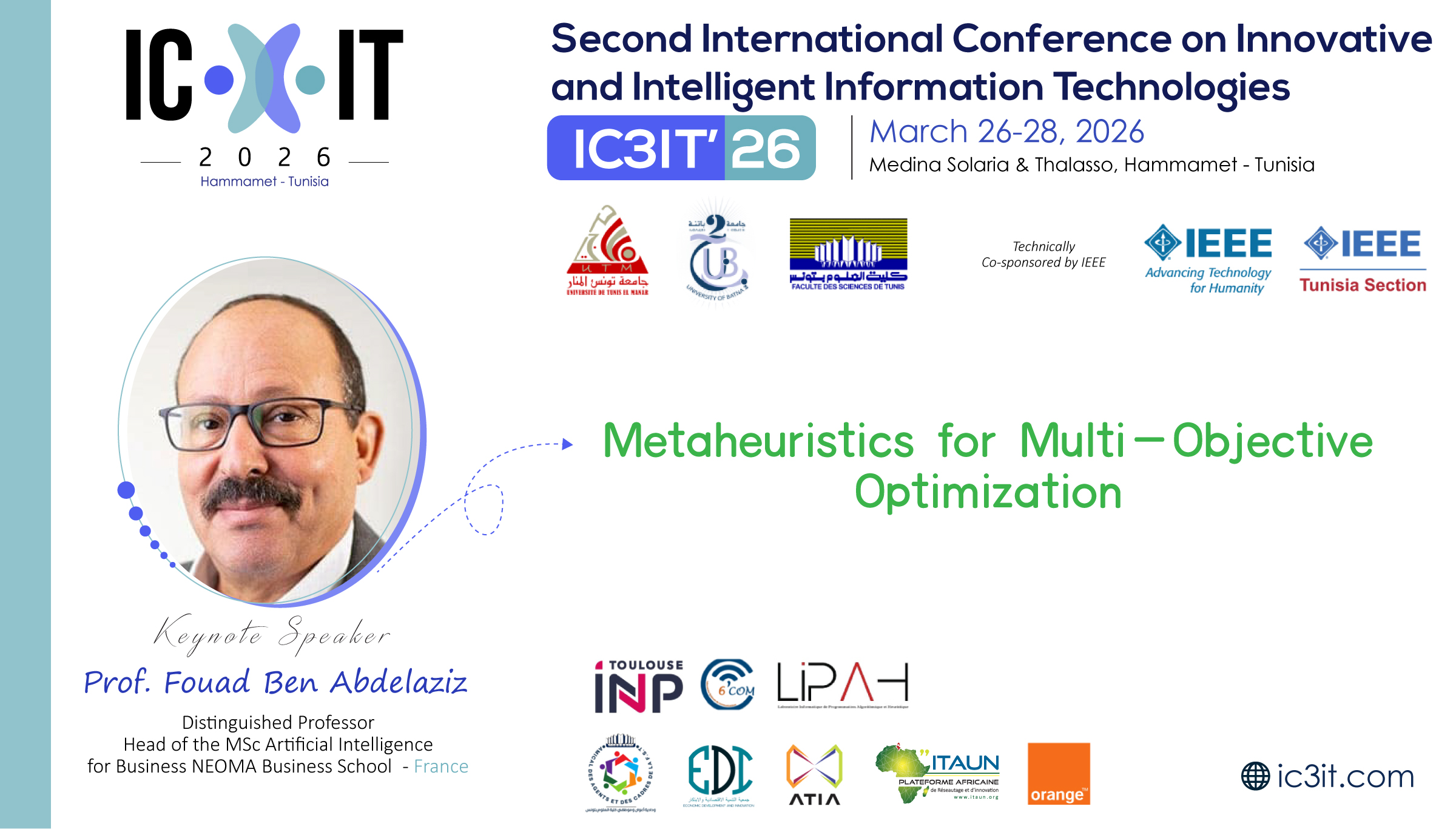
Fouad Ben Abdelaziz; Ph. D. Distinguished Professor – Head of the MSc Artificial Intelligence for Business NEOMA Business School, France
Title: Metaheuristics for Multi-Objective Optimization
Abstract:
This plenary provides an overview of advanced metaheuristic methodologies for multi-objective optimization, emphasizing algorithmic developments, theoretical foundations, and performance analysis. Multi-objective problems commonly feature non-convex and discontinuous Pareto fronts, combinatorial explosion, and high-dimensional decision spaces, making classical deterministic optimization insufficient. Accordingly, the talk focuses on population-based and stochastic frameworks capable of generating high-quality Pareto approximations with convergence–diversity trade-offs.
We review major algorithmic families—including evolutionary multi-objective optimization, decomposition-based approaches, swarm-intelligence methods, and differential evolution variants—with detailed discussion of dominance relations, selection operators and decomposition strategies.
In addition to surveying the state of the art, the speaker will also present several of his own multi-objective optimization methods and demonstrate their performance relative to leading algorithms through extensive benchmarking. Real-world applications from engineering design, logistics, finance, and analytics will further illustrate the practical relevance of these techniques.
Short Bio:
Dr. Ben Abdelaziz is a Distinguished Professor at NEOMA Business School, France, where he chairs the MSc in Artificial Intelligence for Business. A former Senior Fulbright Scholar at the Rutgers Center for Operations Research (USA), he holds a PhD from Laval University (Canada), an MBA, and a BSc in Mathematics from the University of Tunis.
He has held academic positions at the University of Dubai, the American University of Beirut, and the University of Tunis, and has been a visiting scholar at institutions such as Pace University N.Y. USA, the University of Coimbra, Portugal, and the University of Milan, Italy.
His research focuses on multi-objective stochastic optimization and AI tools for multi-attribute portfolio selection, with publications in leading journals including EJOR, JORS, IJAR, FSS, ANOR, and CAIE. He has also served as Guest Editor for EJOR and FSS and has chaired major international conferences such as MOPGP, AFROS, and MCDM 2024.