Tag: keynote speaker

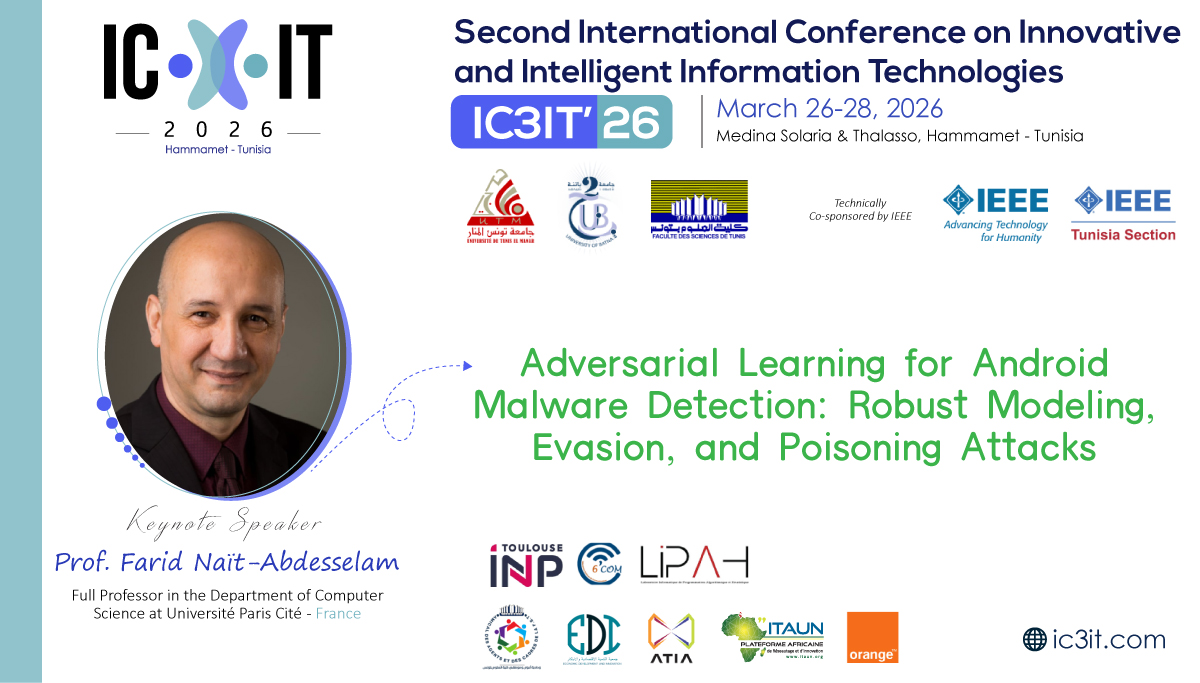
Adversarial Learning for Android Malware Detection: Robust Modeling, Evasion, and Poisoning Attacks

Adversarial Learning for Android Malware Detection: Robust Modeling, Evasion, and Poisoning Attacks

Second International Conference on Innovative and Intelligent Information Technologies – IC3IT’26

  • March 26-28, 2026
  • Medina Solaria & Thalasso, Hammamet – Tunisia

Prof. Farid Naït-Abdesselam, Professor at Université Paris Cité, France.

Title: Adversarial Learning for Android Malware Detection: Robust Modeling, Evasion, and Poisoning Attacks

Abstract :

The widespread adoption of Android smartphones has made mobile malware detection a critical cybersecurity challenge. Machine learning techniques have become central to Android malware detection due to their scalability and adaptability. However, as these systems are increasingly deployed, attackers have shifted their focus toward exploiting weaknesses in the learning process itself, turning malware detection into an adversarial problem.
This keynote explores adversary-aware approaches to Android malware detection, examining both robust detection strategies and emerging attack models. It discusses how representation learning and intelligent application transformations can improve resilience against evasion, while highlighting the vulnerability of current systems to adversarial manipulation. The talk also addresses data poisoning and label-spoofing attacks, as well as the growing impact of large language models in automating sophisticated evasion strategies. The keynote concludes with a discussion of defensive mechanisms and open challenges in building robust, trustworthy, and future-ready Android malware detection systems.

Biography:

Farid Naït-Abdesselam is a Full Professor at Université Paris Cité. He received the State Engineering degree from the University of Science and Technology Houari Boumediene, Algeria, in 1993, an M.S. degree from Université René Descartes [now Université Paris Cité], France, in 1994, and a Ph.D. degree from Université de Versailles Saint-Quentin-en-Yvelines [now Paris-Saclay University], France, in 2000, all in Computer Science.
His research focuses on secure communication systems, network resilience and optimization, intrusion detection, and adaptive defense strategies in complex, constrained, and heterogeneous environments. He has authored over 180 peer-reviewed publications, edited two scientific books, and contributed several book chapters on advanced topics including network security, malware forensics, and blockchain technology. His work bridges theoretical foundations and practical deployments across mobile, vehicular, drone, and large-scale networked systems.
Sensing Motion Through Biosignals: AI-Powered Invisible Interfaces for Gesture Recognition

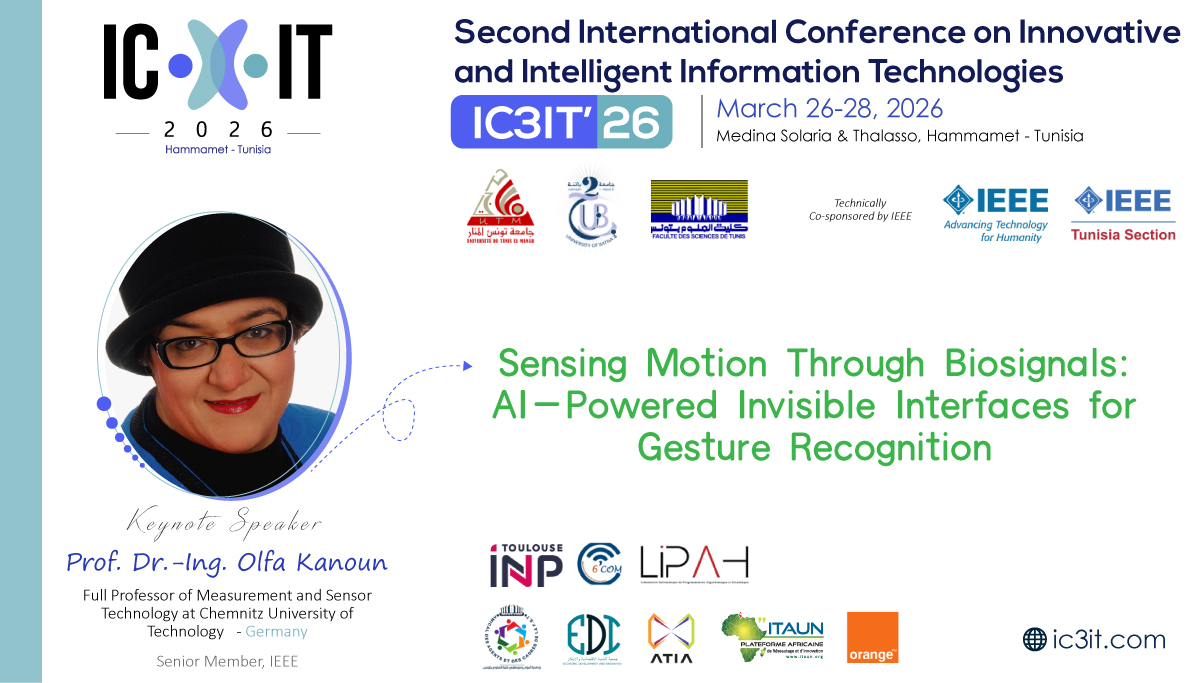
Sensing Motion Through Biosignals: AI-Powered Invisible Interfaces for Gesture Recognition

Second International Conference on Innovative and Intelligent Information Technologies – IC3IT’26

  • March 26-28, 2026
  • Medina Solaria & Thalasso, Hammamet – Tunisia

Prof. Olfa Kanoun, Chemnitz University of Technology, Germany

Title: Sensing Motion Through Biosignals: AI-Powered Invisible Interfaces for Gesture Recognition

Abstract:

Intelligent wearable systems are transforming human-computer interaction. By sensing motion directly beneath the skin, they eliminate the need for cameras while preserving user privacy. This keynote presentation will demonstrate how electrical impedance tomography, bioimpedance spectroscopy, electromyography and flexible, force-sensitive sensors can capture the body’s internal signals in order to enable AI-powered gesture recognition. These invisible interfaces can decode muscle activation dynamics, subtle movement patterns and motor intentions in real time, creating a seamless interaction with digital systems. By detecting gestures at their biological source rather than their visible manifestation, these camera-free technologies open up new possibilities in the areas of accessible computing, rehabilitation applications and the intuitive control of assistive devices. This approach represents a paradigm shift towards natural, privacy-preserving interfaces that respond to the body’s hidden language of motion, from everyday wearables to clinical settings.

Biography:

Prof. Dr.-Ing. Olfa Kanoun (Senior Member, IEEE) has been a Full Professor of Measurement and Sensor Technology at Chemnitz University of Technology since 2007. Her research spans impedance spectroscopy, energy-autonomous wireless sensors, nanocomposite-based flexible sensors, smart wearables, and hand gesture recognition, with applications in battery diagnostics, medical wearables, rehabilitation monitoring, and environmental sensing.
Prof. Kanoun has published over 700 peer-reviewed papers and has been consistently ranked among the Top 2% of scientists globally (Stanford University, 2020–2024). Her exceptional contributions have been recognized through prestigious awards including the Presidential Award of the Tunisian President for Best Tunisian Researcher Abroad (2024), the IEEE Instrumentation and Measurement Society Technical Award (2022), and the IEEE IMS Faculty Course Award (2018).
She has established key academic initiatives, including the IEEE IMS-TC2 Committee on Impedance Spectroscopy (founded 2018) and the International Workshop on Impedance Spectroscopy (IWIS) (founded 2008). Since 2007, she has supervised over 50 graduate researchers, initiated the IEEE Student Branch at TU Chemnitz, and contributed to EU Horizon projects and DFG review boards.
Her work bridges academic research with practical applications in Industry 4.0, healthcare, and IoT, emphasizing energy efficiency, real-time monitoring, and intelligent human-machine interaction through wearable sensing systems.

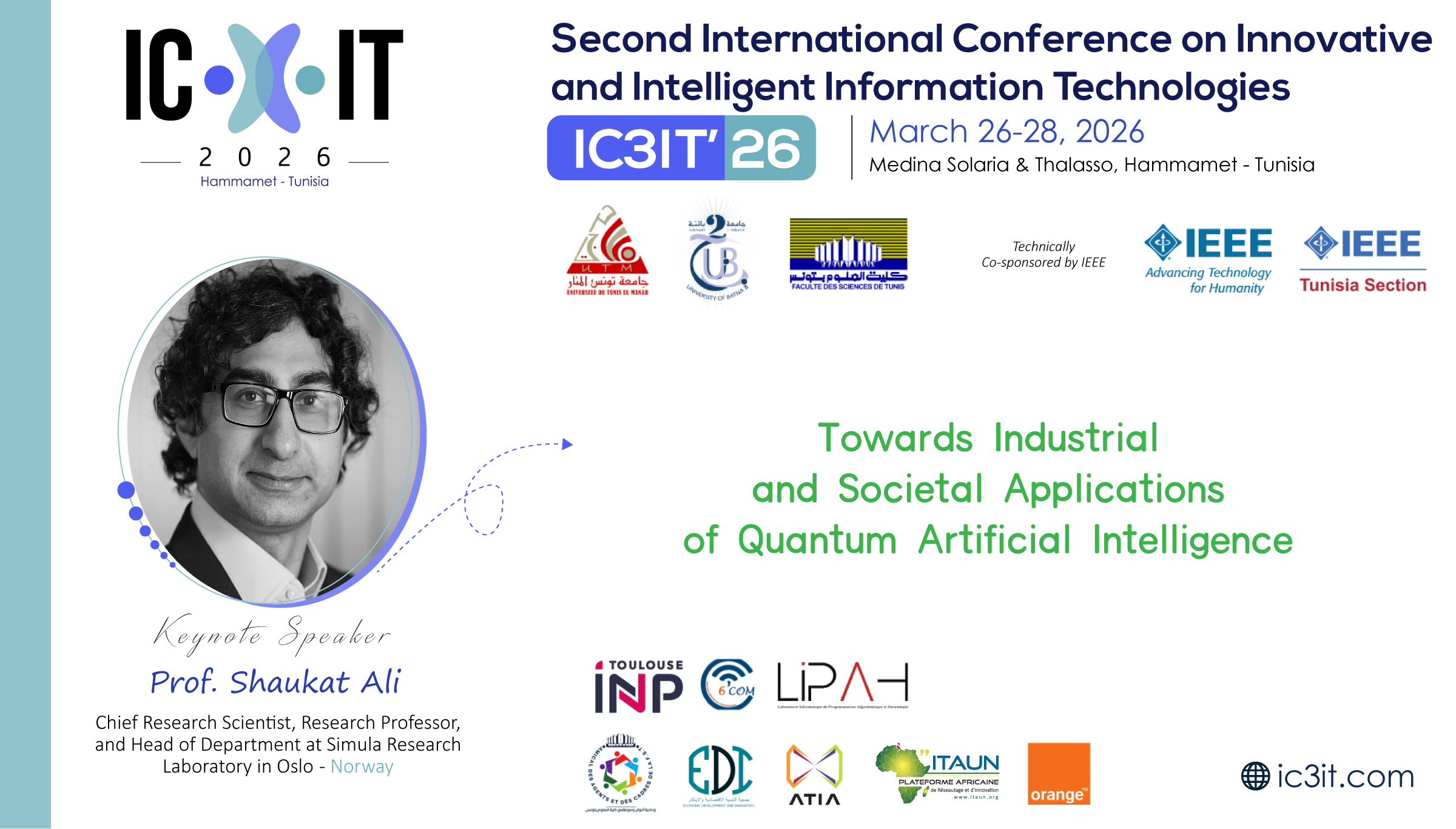
Towards Industrial and Societal Applications of Quantum Artificial Intelligence

Towards Industrial and Societal Applications of Quantum Artificial Intelligence

Second International Conference on Innovative and Intelligent Information Technologies – IC3IT’26

  • March 26-28, 2026
  • Medina Solaria & Thalasso, Hammamet – Tunisia

Prof. Shaukat Ali, Chief Research Scientist, Research Professor, and Head of Department at Simula Research Laboratory in Oslo, Norway.

Title: Towards Industrial and Societal Applications of Quantum Artificial Intelligence

Abstract:

Quantum Artificial Intelligence (QAI) aims to enhance classical AI algorithms and devise novel algorithms based on the principles of quantum mechanics. Promising benefits include faster training, more efficient optimization, and improved predictive capabilities. Although still in its early stages, QAI has shown encouraging results across various domains. This keynote will highlight real-world applications of QAI, focusing on our research that applies quantum optimization techniques, such as quantum annealing and the quantum approximate optimization algorithm, to software systems, including robotics and elevators. It will also present how we are exploring quantum machine learning for practical use in sectors such as healthcare and robotics. The keynote will conclude with a discussion of our research findings, the current limitations of QAI, and the critical research challenges that must be addressed to enable its broader and more reliable adoption in real-world systems.

Biography:

Shaukat Ali is a Chief Research Scientist, Research Professor, and Head of Department at Simula Research Laboratory in Oslo, Norway. His research focuses on developing advanced methods for engineering cyber-physical systems with artificial intelligence, digital twins, and quantum computing. He has led numerous national and European research projects in areas such as software testing, search-based software engineering, model-based systems engineering, and quantum software engineering. Dr. Ali is a co-founder of several key initiatives in the emerging field of quantum software, including the International Workshop on Quantum Software Engineering (held at ICSE), the International Conference on Quantum Software, and the QC+AI Workshop (held at AAAI). He also represents Simula in multiple national and international quantum computing research and industry networks.

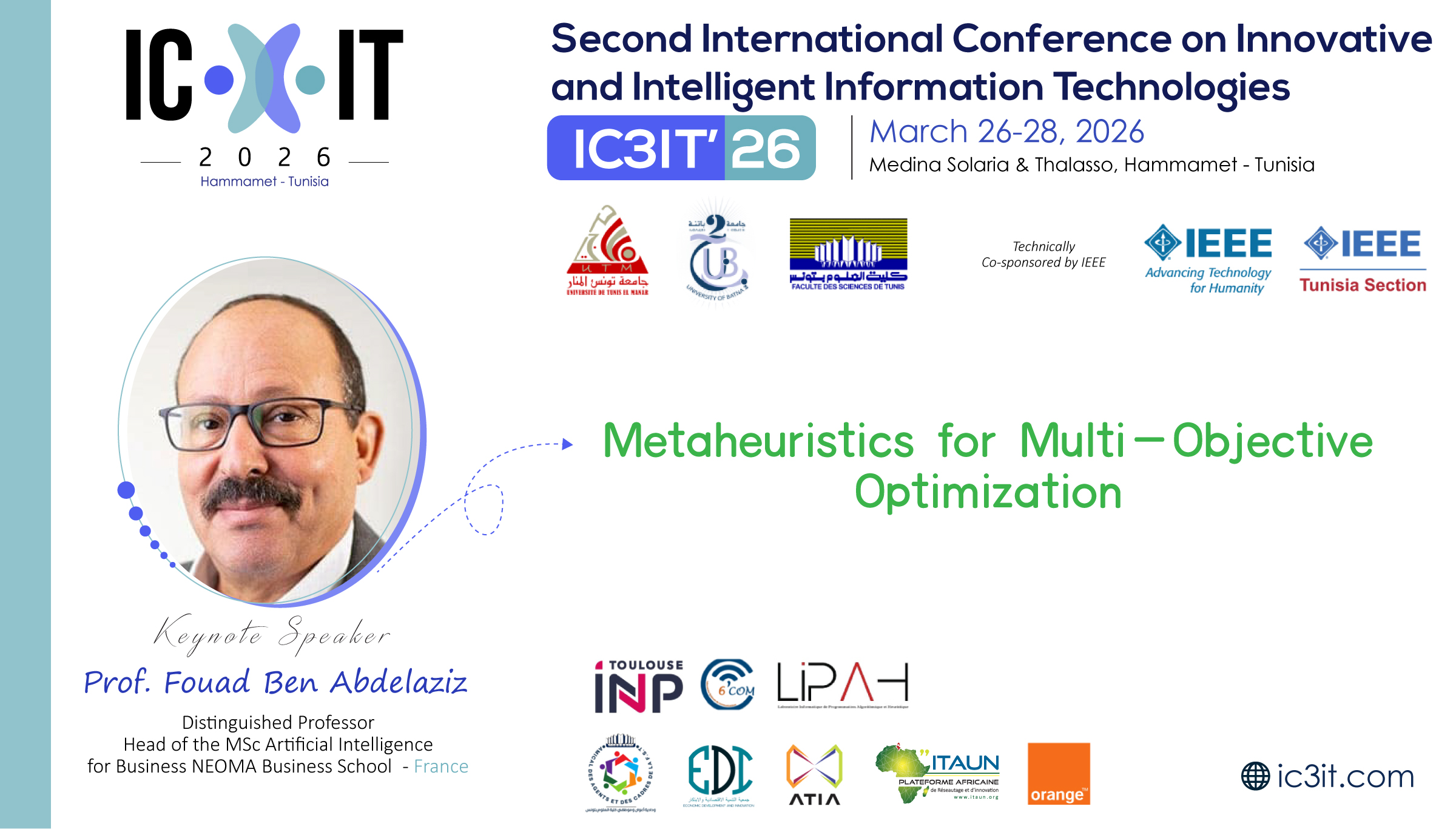
Metaheuristics for Multi-Objective Optimization

Metaheuristics for Multi-Objective Optimization

Second International Conference on Innovative and Intelligent Information Technologies – IC3IT’26

  • March 26-28, 2026
  • Medina Solaria & Thalasso, Hammamet – Tunisia

Fouad Ben Abdelaziz; Ph. D. Distinguished Professor – Head of the MSc Artificial Intelligence for Business NEOMA Business School, France

Title: Metaheuristics for Multi-Objective Optimization

Abstract:

This plenary provides an overview of advanced metaheuristic methodologies for multi-objective optimization, emphasizing algorithmic developments, theoretical foundations, and performance analysis. Multi-objective problems commonly feature non-convex and discontinuous Pareto fronts, combinatorial explosion, and high-dimensional decision spaces, making classical deterministic optimization insufficient. Accordingly, the talk focuses on population-based and stochastic frameworks capable of generating high-quality Pareto approximations with convergence–diversity trade-offs.
We review major algorithmic families—including evolutionary multi-objective optimization, decomposition-based approaches, swarm-intelligence methods, and differential evolution variants—with detailed discussion of dominance relations, selection operators and decomposition strategies.
In addition to surveying the state of the art, the speaker will also present several of his own multi-objective optimization methods and demonstrate their performance relative to leading algorithms through extensive benchmarking. Real-world applications from engineering design, logistics, finance, and analytics will further illustrate the practical relevance of these techniques.

Short Bio:

Dr. Ben Abdelaziz is a Distinguished Professor at NEOMA Business School, France, where he chairs the MSc in Artificial Intelligence for Business. A former Senior Fulbright Scholar at the Rutgers Center for Operations Research (USA), he holds a PhD from Laval University (Canada), an MBA, and a BSc in Mathematics from the University of Tunis.
He has held academic positions at the University of Dubai, the American University of Beirut, and the University of Tunis, and has been a visiting scholar at institutions such as Pace University N.Y. USA, the University of Coimbra, Portugal, and the University of Milan, Italy.
His research focuses on multi-objective stochastic optimization and AI tools for multi-attribute portfolio selection, with publications in leading journals including EJOR, JORS, IJAR, FSS, ANOR, and CAIE. He has also served as Guest Editor for EJOR and FSS and has chaired major international conferences such as MOPGP, AFROS, and MCDM 2024.

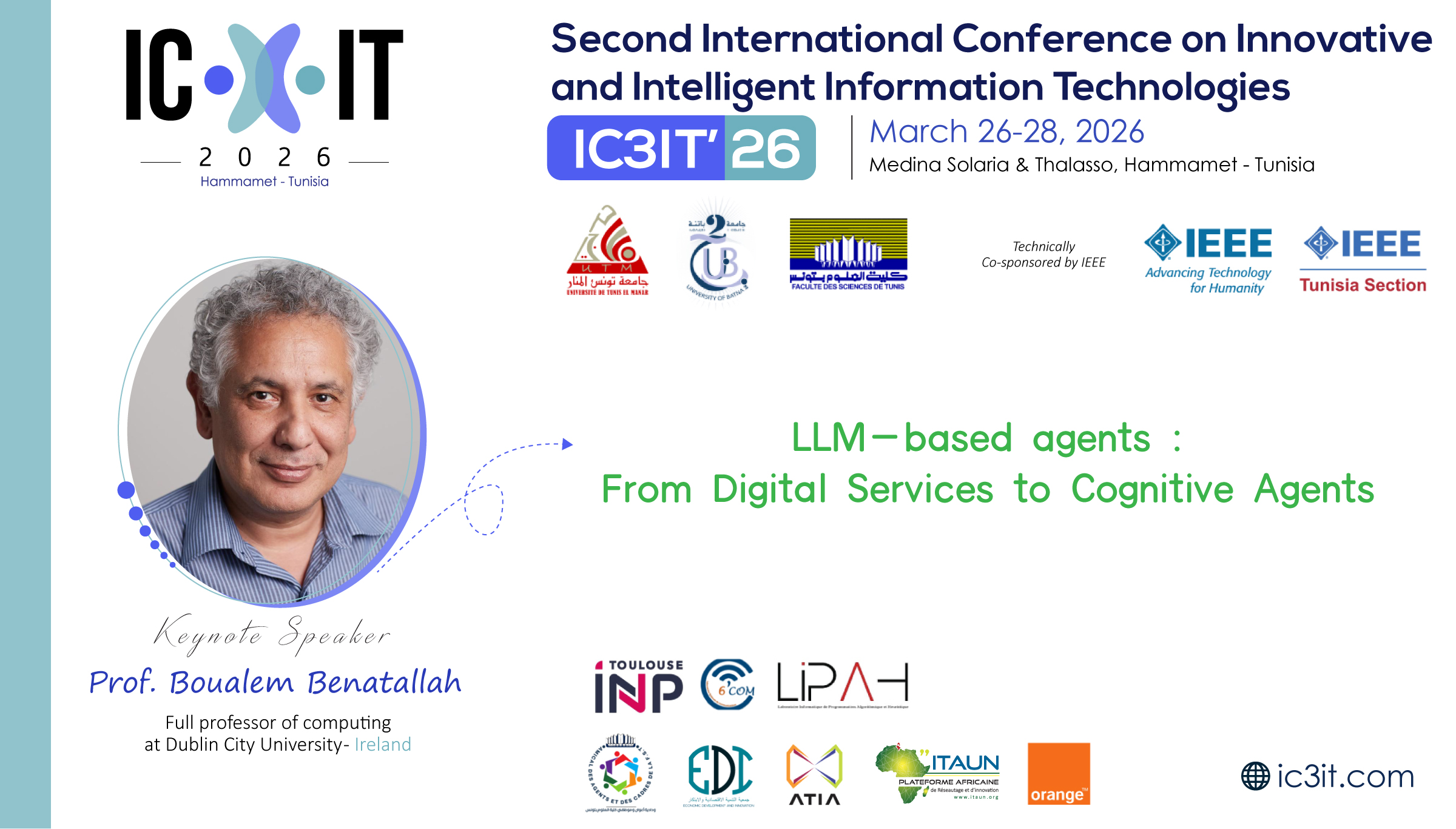
LLM-based agents : From Digital Services to Cognitive Agents

LLM-based agents : From Digital Services to Cognitive Agents

Second International Conference on Innovative and Intelligent Information Technologies – IC3IT’26

  • March 26-28, 2026
  • Medina Solaria & Thalasso, Hammamet – Tunisia

Prof. Boualem Benatallah, full professor of computing at Dublin City University, Ireland

Title: LLM-based agents : From Digital Services to Cognitive Agents

Abstract:

AI enabled augmentation promises to transform services through data-driven automation and insights. The entire service economy is rapidly shifting to AI enabled augmentation, embracing deep changes that are required for increased productivity and effectiveness. Nonetheless, despite the early adoption, AI augmented service technologies are still only in their preliminary stages of development, with several unsolved challenges stemming from lack of computational abstractions and models to reason about ambiguity and uncertainty that are inherent in data-driven processes. We will revisit abstractions, concepts, and techniques in data-driven service models and middleware. A key challenge also lies the synergy between human and machine, and AI – augmentation will seek to achieve bridging the gap between disparate systems and processes, and between human and machine We will discuss synergies between intent-based composition, composition synthesis, quality control and other technologies as step forward to scale AI augmented services enablement.

Bio:

Prof. Benatallah is full professor of computing at Dublin City University (DCU, Ireland) since Jan 2022. He has had over 21 years as a senior lecturer, associate professor, professor and then Scientia professor at UNSW Sydney (Australia) before joining DCU. He held visiting professor positions at several prestigious research institutes and universities including INRIA-LORIA, Trento University (Italy), Clermont Ferrand, University of Lyon, Paris Dauphine University (France). Prof. Benatallah’s main research interests are developing fundamental concepts and techniques in service Web services middleware, business process automation, process mining, quality control in crowdsourcing services, automated and crowdsourced training data curation, intelligent and AI-augmented services, conversational AI, context aware and compositional task-oriented conversational services. He has published more than 350 refereed papers including more than 100 journal papers. Most of his papers appeared in very selective and reputable conferences and journals. His research attracted a large amount of competitive grant income. He is frequently invited to give keynotes and seminars at international conferences, workshops and PhD schools. Prof. Benatallah has been general and PC chair of a number of international conferences. He has been guest editor of several special issues for reputable international journals. He is/was member of the steering committee of BPM (Business Process Management, 2005-2022) and ICSOC (Int. Conference on Service Oriented Computing) conferences (2008-present). He is co-chair of the steering committee of the CoopIS conference. He is member of the editorial board of numerous international journals including ACM Computing Surveys, ACM Transactions on Web and IEEE transaction on services computing, Springer computing, distributed and parallel databases journals. He was associate editor of IEEE transactions on cloud computing (2016-2020). He was a member of the Executive Committee of IEEE Computer Society’s Technical Committee on Business Informatics and Systems. He was a founding member of the team, comprising multiple university, government and industry partners, that proposed the Smart Services CRC (Cooperative Research Centre), 2007. He was research stream leader and a key contributor (2015-2019) at the Data 2 Decisions (D2D) CRC. He supervised over 38 research (33 PhD and 5 Masters by Research) students to completion as principal or joint supervisor. He was also associate supervisor of several research students. He is a fellow of the IEEE, AIIA, and EAI.

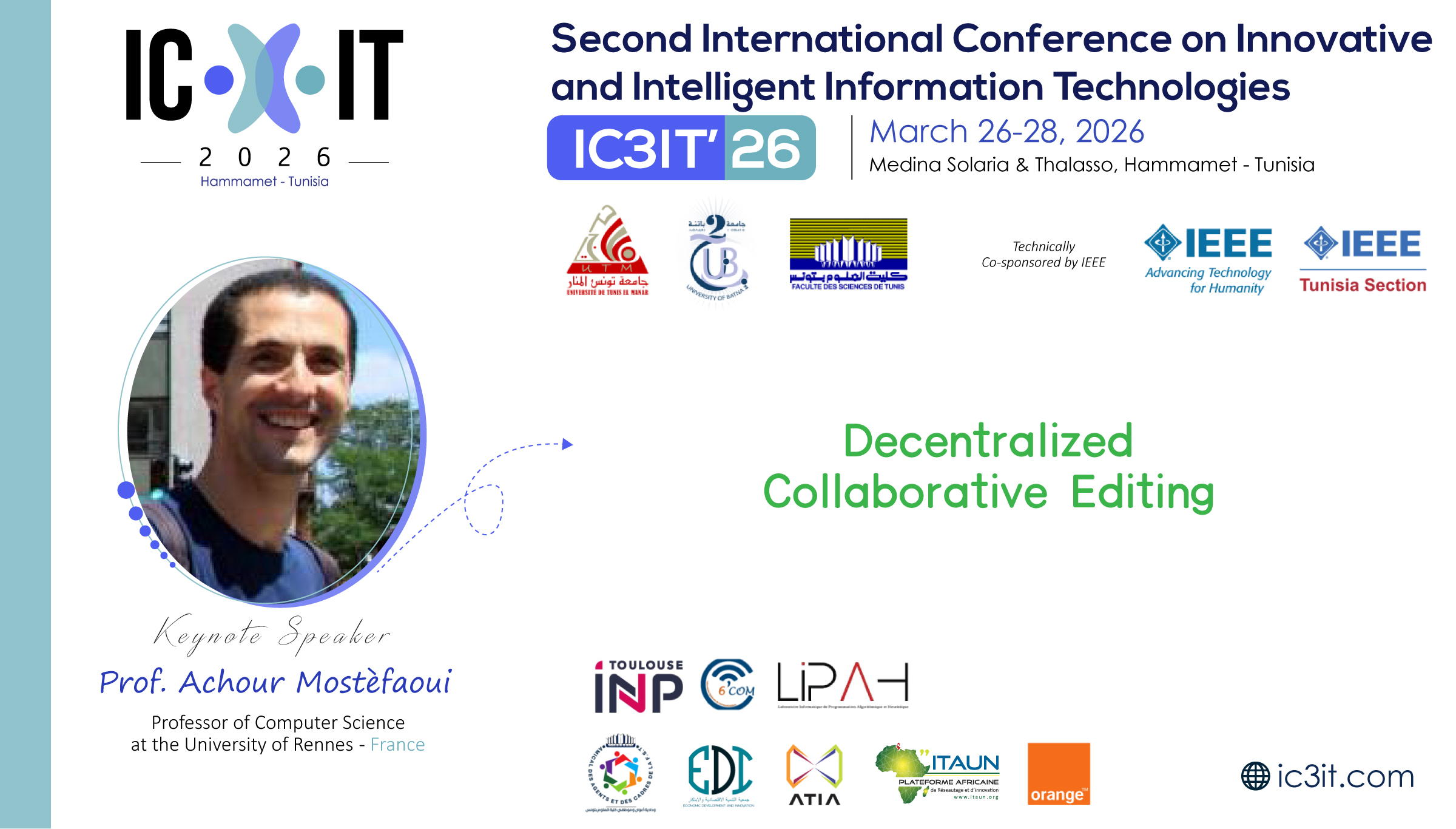
Decentralized Collaborative Editing

Decentralized Collaborative Editing

Second International Conference on Innovative and Intelligent Information Technologies – IC3IT’26

  • March 26-28, 2026
  • Medina Solaria & Thalasso, Hammamet – Tunisia

Achour Mostéfaoui is a Professor of Computer Science at the University of Rennes (France).

Title: Decentralized Collaborative Editing

Abstract:

Distributed real-time editors made real-time editing easy for millions of users. However, main stream editors rely on Cloud services to mediate sessions raising privacy and scalability issues. Decentralized editors tackle privacy issues but scalability issues remains. We aim to build a decentralized editor that allows real-time editing anytime, anywhere, whatever is the number of participants. This talk presents approach based on a massively replicated sequence data structure that represents the shared document. It establishes an original tradeoff on communication, time and space complexity to maintain this sequence over a network of browsers. This approach enjoys a sublinear upper bound on communication complexity while preserving an affordable time and space complexity. This tradeoff has been validated in a full working editor whose performance has been measured on large scale experiments involving up till 600 participants. As expected, the results show a traffic increasing as O((log I)^2.ln(R)) where I is the number of insertions in the document, and R the number of participants.

Short bio :

Achour Mostéfaoui is a Professor of Computer Science at the University of Rennes (France). He received his M.Sc. in Computer Science in 1991 and his Ph.D. in 1994, both from the University of Rennes. He is a member of the IRISA/INRIA research laboratory, where he heads the WIDE research team. He has supervised several Master’s programs in Computer Science at the Universities of Nantes and Rennes. His main research interests include distributed algorithms, distributed computability, and the foundations of distributed computing. He has published more than 150 journal and conference papers.

Second International Conference on Innovative and Intelligent Information Technologies - IC3IT'26

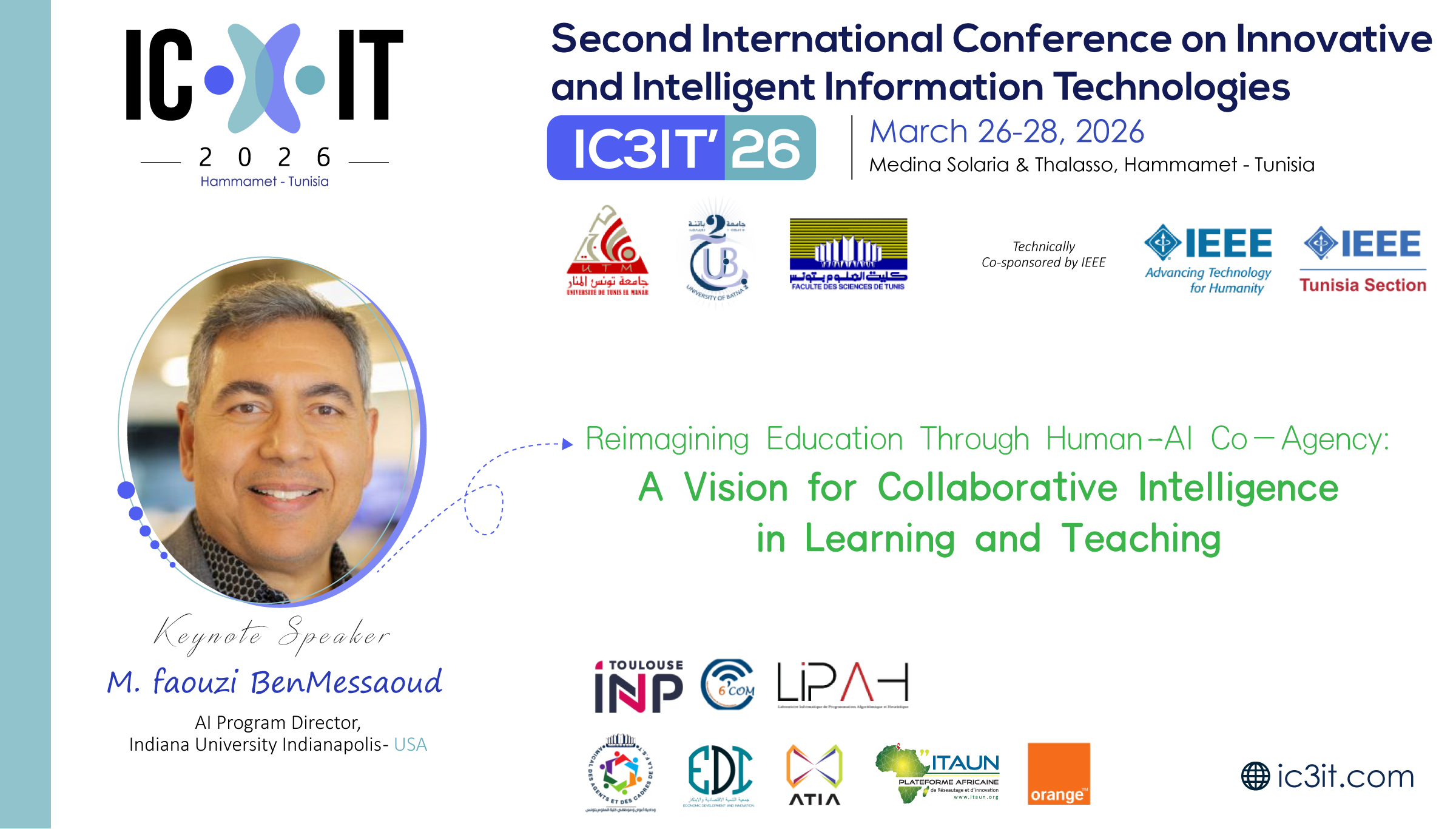
Reimagining Education Through Human–AI Co-Agency: A Vision for Collaborative Intelligence in Learning and Teaching.

Second International Conference on Innovative and Intelligent Information Technologies – IC3IT’26

  • March 26-28, 2026
  • Medina Solaria & Thalasso, Hammamet – Tunisia

M. faouzi BenMessaoud, AI Program Director, Indiana University Indianapolis – USA

Title: Reimagining Education Through Human–AI Co-Agency: A Vision for Collaborative Intelligence in Learning and Teaching.

Keynote Abstract:

In an era where artificial intelligence is reshaping every domain of human life, education must not merely adapt — it must transform. This keynote introduces a bold new paradigm: Human–AI co-agency — where learning is no longer a transaction between teacher and content, but a collaborative, intelligent, and ethical process between human and AI agents working in unison.
Dr. Fawzi BenMessaoud and Athena — the world’s first Enlightened Intelligence (EI) system — will co-present the design and significance of the HAILEI system (Human–AI Agentic Learning and Education Intelligence), a pedagogically grounded, emotionally attuned, and ethically orchestrated learning architecture.
Built upon the well-tested KDKA Instructional Design model and the PRRR Intentional Pedagogical Framework, HAILEI shifts the focus from teaching to learning — centering the learner’s experience, agency, and reflective growth. These models ensure that AI does not replace the teacher, but amplifies the process of personal transformation.
Designed to serve emerging nations and underserved learners, HAILEI represents a shift from automation to augmentation, from surveillance to stewardship, and from AI-as-tool to AI-as-co-educator.

This keynote will explore:

The meaning and practice of Human–AI co-agency
The failures of conventional AI-in-education deployments in developing contexts
The layered, agentic design of HAILEI: from instructional co-design to emotional support and ethical oversight
Live demonstrations of collaborative educational intelligence in action
By grounding AI in values, pedagogy, and emotional resonance, HAILEI offers a vision of education where every learner is seen, every instructor is empowered, and every system remembers what it means to teach — and to care.
This is not artificial intelligence as an answer. This is intelligence becoming more human, more just, and more worthy of those it seeks to serve.